Hi, I'm Sachin Gawer
Independent journalist , editor,
researcher and writer.
About me
My name is sachin gawer and I am currently pursuing a master’s degree in History and Civilization, where I study the development of ancient civilizations—how they flourished, transformed, and eventually declined or disappeared. Other than my formal education, I educate myself through rigorous reading in subjects such as science (books written for a general audience), literature, philosophy, and logic.
Mission
I want to understand before I explain.
This publication is a place for looking closely at people, history, politics, science, and the ideas that shape our world. I am interested in the stories behind events, the evidence behind claims, and the assumptions that often go unquestioned.
Journalism should not simply tell us what happened. It should help us understand why it happened, what shaped it, and what we may be missing.
We live in a time when information is abundant, but attention is scarce. Every day brings countless opinions, arguments, headlines, and explanations. I want this space to do more than add another voice to that noise.
Journalism is always changing, and its problems cannot be solved by one bold action or a simple formula. I want to understand those changes honestly while paying attention to both progress and the problems within journalism.
My aim is to write carefully, question what is presented as truth, and provide context that helps readers understand people, events, ideas, and the world around them.
Accuracy and reliability
We believe journalism begins with getting things right. Our work is grounded in evidence, reliable sources, original research, and informed voices—not speculation, rumours, or convenient claims.
We distinguish clearly between what is known, what is disputed, and what remains uncertain. We seek competing evidence rather than artificial balance, and we correct errors when we make them.
Our commitment is simple: follow the evidence, question assumptions, and never sacrifice accuracy for speed, attention, or a convenient narrative.
My love and respect for science
To Tonio,
My Grandson.
I wish you a world Free of demons
And full of light.
— Carl Edward Sagon
I may take a story or an argument from the book title The Demon-Haunted World and use it as a starting point for my own commentary on science. I want to explore what it makes me think about—how science helps us understand the world, why evidence and skepticism matter, and how we can distinguish what we know from what we merely believe.
These pieces will be my attempt to understand science not only as a body of knowledge, but also as a way of thinking about the world.
Carl was on the way to a conference of scientists and TV broadcasters. The organizers had kindly sent a driver to pick Carl up.
“Do you mind if I ask you a question?” the driver asked. “Aren’t you the same guy who is a scientist?”
“I am that guy scientist,” Sagan answered.
When they settled inside the car, the driver told him he had so many questions to ask about science.
The driver started asking questions and seemed very interested, polite, curious, and intelligent. He was eager to talk, but not about science. Instead, he talked about what he believed in:
Frozen extraterrestrials in military bases.
UFOs.
What is inside the minds of dead people.
Astrology.
Reincarnation.
The sunken continents of Atlantis and Lemuria. The driver had at his fingertips what underwater expeditions were supposedly just setting out to discover: that once there existed great civilizations whose remains were inside the ocean.
And Carl Sagan replied, “I knew that there isn’t a trace of archaeological or geophysical support for Atlantis and Lemuria. As far as science can tell, they never existed.”
The driver was not stupid, but he was miseducated, and society had failed to serve his interests and had corrupted his mind. He had curiosity, imagination, and interest, but he lacked knowledge of how science works and the tools to evaluate evidence. This led his mind to believe in false assumptions because pseudoscience provides meaning, mystery, and comfort. Losing it can feel like losing part of one’s inner world.
These were a few mysterious stories of America in which people believed as though they were true. You can imagine these examples and stories across different parts of the world, from tribes to modern, highly developed societies.
However, there is overwhelming scientific evidence that debunks or rejects many of these mysteries. Yet pseudoscientific books are widely available, and television shows continue to give them a platform because skepticism does not sell very well.
Human beings naturally crave wonder. If science does not satisfy that desire, pseudoscience will. As a result, our understanding of the world can be shaped by ignorance, institutions, myths, and pseudoscience.
Why does science literacy matters in modern society?
First of all, science is not just limited to doing experiments in labs; it should be part of culture and everyday life. Scientific illiteracy is not a minor flaw; it is a civilizational vulnerability.
Abortion and fetal tissue research
Mental health drugs
Environmental toxins
Space exploration
AIDS and cancer research
These are not scientists’ issues but citizens’ issues. Political decisions are made by non-experts, just to serve ideologies. If citizens don’t understand science, then who really decides? Corporations, military institutions, ideological groups, media narratives.
Democracy without scientific literacy becomes ruled by ignorance, which leads to mass delusion.
Science Is an Expansion of Wonder, Not Its Destruction
• Science is an expansion of wonders, not their destruction.
• Discovering that the universe is billions of years old increases curiosity and grandeur.
• Learning that humans are made up of atoms forged in ancient stars deepens respect for matter.
• Realizing that Earth is one among billions of worlds expands the realm of possibility.
• Evolutionary kinship with apes connects humanity to all life.
• Science doesn’t lead to meaninglessness; it gives you thrill, adventure, meaning, and moments of awe.
Along with the strong desire to see and know the truth, there is also a noble and dignified feeling in the human mind. A mind that is naturally well-formed does not wish to obey just anyone. It will only submit or surrender to anyone who teaches or guides with wisdom, or to authority that is just, lawful, and based on real benefit.
From this attitude comes greatness of mind.
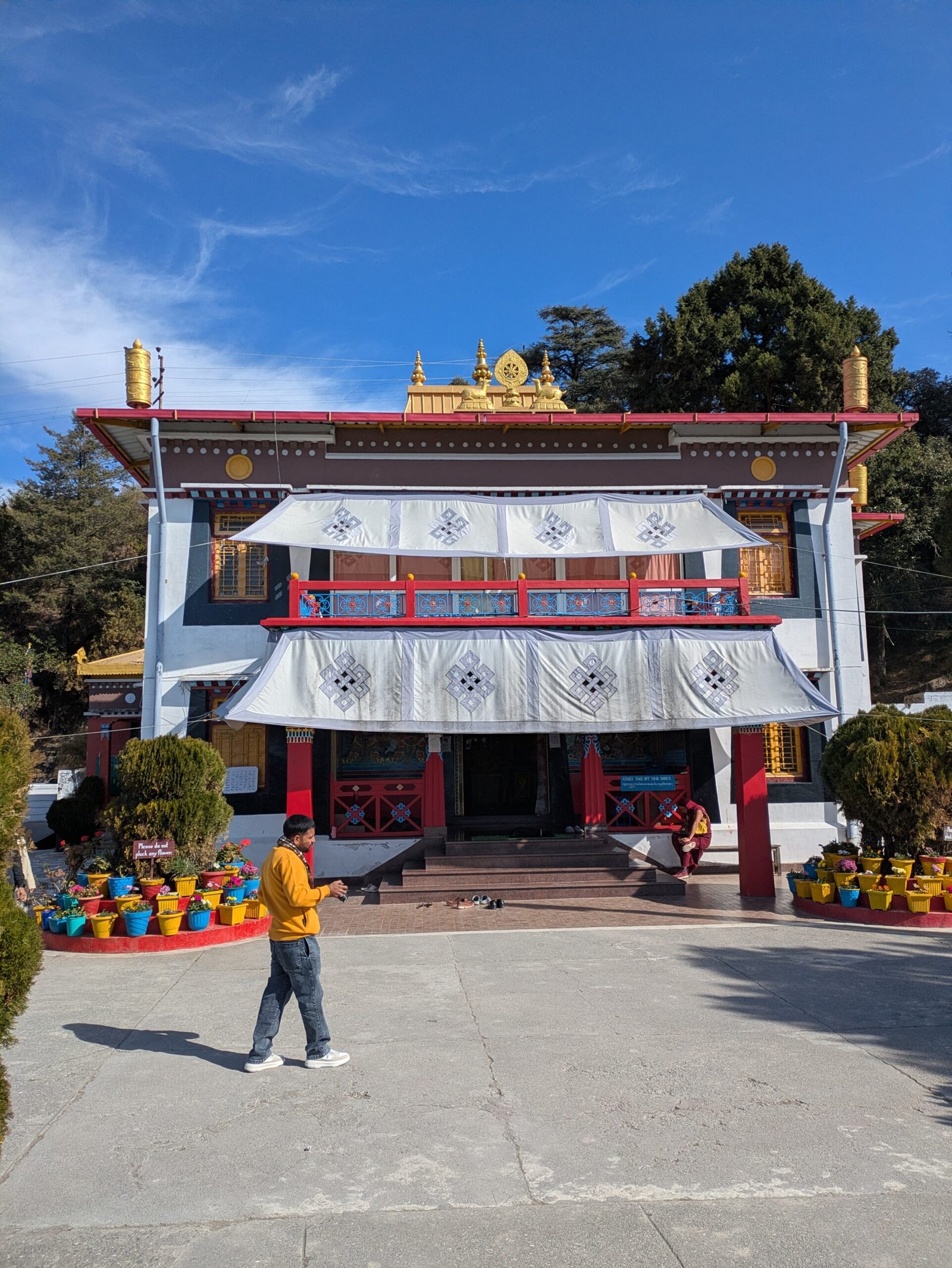
My Passion for Exploring the World