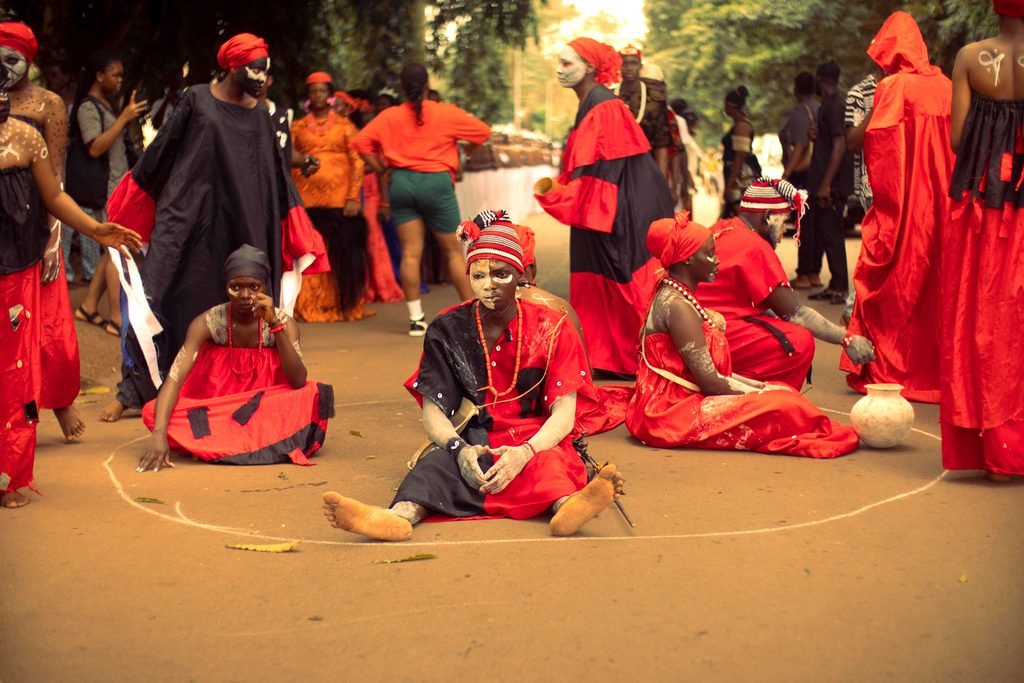
Writing an oral history of world is a silly thing to do. There is too much information related to personal stories, folks, myths, interviews, memories and for one person to know and to understand that how much true reality is there which affects the life of people is daunting task. The reading is endless, and it is very easy to make mistakes. But not having a sense of oral history is even more silly because then you would only have to rely on political event-driven history which I feel quite unfair. Imagine you could call up and talk to a poor farming woman from the time of Jesus, or an Aztec warrior. If you showed them your mobile phone and tried to explain how it works (assuming you know), you would have no chance of making them understand. You would first have to describe a whole world of unfamiliar ideas to them. That would take almost a whole history book. But if you wanted to tell them about Stalin, or corrupt politicians, or the fights between dictators and people in the Arab world today, they would understand right away because they can relate with them easily because these events have many similarities as compare to past history. On the other hand, history can often feel like a confusing collection of stories. Therefore, I have selected certain moments and voices from Chernobyl and World War II survivors that serve as meaningful examples. These stories can be difficult to read, but I hope you will approach them with the maturity and openness they deserve.
Oral history can be defined as the recording, preservation and interpretation of historical information, based on the personal experiences and opinions of the speaker. It may take the form of eye-witness evidence about the past, but can include folklore, myths, songs and stories passed down over the years by word of mouth. While it is an invaluable way of preserving the knowledge and understanding of older people, it can also involve interviewing younger generations.
Oral history is particularly useful for capturing stories from minority groups or small communities who will not often be represented in more formal histories. It is also useful when there is a lack of other sorts of evidence, whether written or visual. For community historians it is a valuable tool for investigating what people did, what they thought they were doing at the time, and what they now think they did. As well as recording people’s opinions and the meanings they attach to past events, it is also useful for recording community stories, songs, folklore etc.
It is not very new, for example in a hunter gather society tracking relationships among just a few dozen people requires a huge amount of information for more complex social communication. About 70,000 years ago, modern Sapiens gained language skills that let them gossip for hours. Reliable information about who could be trusted allowed small bands to grow larger and develop more sophisticated cooperation. The gossip theory might sound like a joke, but many studies support it. Even today, most human communication—emails, calls, newspapers—is gossip. It feels like our language evolved just for this.
Gossip usually focuses on wrongdoing. Rumour-mongers act like the original journalists—they protect society from cheats and freeloaders. But the truly unique feature of human language is not about sharing real information. It is the ability to talk about things that do not exist at all. Only Sapiens can discuss entities they have never seen, touched, or smelled like Legends, Myths, Gods, and religions that gives unprecedent ability to cooperate.
For thousands of years, human beings used stories, myths, and religious beliefs to explain the world around them because they had no telescopes, no satellites, and no scientific method. The geocentric model – the belief that the Earth stood still at the center of the universe while the Sun, stars, and planets all revolved around us – was one of the most powerful and long-lasting of these stories. The seasons changed in rhythm with the sky, and because food and survival depended on those seasons, it seemed natural to believe that the entire heavens existed for human benefit. This story was woven into scripture, literature, education, and everyday language.
Memory does not work like a camera. People do not record everything perfectly. They remember strong emotions, unique events, and turning points. They forget ordinary days and small details. But with the right cues – a photograph, a familiar smell, an old object – lost memories can return. Oral historians must be aware that memory is not pure. It is shaped by family stories, media, television, films, and what society expects people to remember. A person’s individual memory may clash with the official story of a nation or a community. That is not a problem. In fact, that is the value of oral history – it captures the real, messy, human side of the past.
Let us learn and understand more about some real stories of modern times, which have been covered by journalists and historians. These interviews were collected in the early to mid-1990s, a time when anti-communism still held some currency as a political idea in the post-Soviet space. It is also certainly true that Chernobyl, while an accident in the sense that no one intentionally caused it, was also the deliberate product of a culture of cronyism, laziness, and a deep-seated indifference toward the general population.
Although Belarus had no nuclear plants of its own, it was surrounded by old Soviet RBMK reactors — the Ignalina plant to the north, the Smolensk plant to the east, and the Chernobyl plant to the south in Ukraine. On April 26, 1986, at 1:23 AM, Reactor Number 4 at Chernobyl exploded, marking the single worst nuclear accident in recorded history. The consequences for Belarus, a small nation of only ten million people, were catastrophic. A total of 485 villages and settlements were destroyed or abandoned due to radiation exposure, and 70 of those villages were permanently buried underground. Even decades later, 2.1 million people, including 700,000 children, continue to live on contaminated land. One in every five Belarusians resides in a radioactive area, and radiation remains the leading cause of population decline in the country, particularly in the Gomel and Mogilev regions, where death rates consistently exceed birth rates.
The scale of radioactive contamination was staggering. Approximately 70% of all radioactive material released from the Chernobyl reactor fell on Belarusian soil, leaving 23% of the country’s land contaminated with cesium-137. Forests, marshes, and farmland were severely affected, and within days, radiation had spread far beyond Belarus, reaching Europe, Asia, and even North America. The reactor itself was eventually sealed beneath a massive concrete structure known as the sarcophagus, yet it remains unstable, riddled with cracks, and its interior condition continues to be largely unknown.
Lyudmilla Ignatenko’s story
Before the disaster, Lyudmilla and Vasily Ignatenko — known tenderly as Vasya — were newlyweds, deeply in love and inseparable. Vasya worked as a firefighter at the Chernobyl power station, and the two lived together in a dormitory near the fire station. Lyudmilla was six months pregnant. By all accounts, it was a simple and happy life, full of the quiet joy of young love and new beginnings. That life changed forever on the night of April 26, 1986. Vasya was called to fight the fire at Reactor Number 4 — he left wearing nothing more than his shirt, with no protective clothing of any kind. The roof was burning with bitumen and radioactive graphite. He returned home gravely ill.
All the firefighters were taken to hospital. Their bodies were swollen and dangerously radioactive, yet doctors initially told families that the men had been poisoned by gas, concealing the truth about radiation exposure. Despite the warnings, Lyudmilla refused to leave her husband’s side. She brought him milk and soup, sat with him through the long hours, and cared for him with unwavering devotion. The men were eventually flown to a specialist radiation hospital in Moscow, and Lyudmilla followed.
What awaited her there was almost unbearable to witness. Vasya deteriorated with each passing day. His skin peeled away in layers, his hair fell out, he bled internally, and his organs began to fail. The radiation level recorded on his body was 1,600 roentgen — a figure that puts into perspective just how lethal his exposure was, given that 400 roentgen is considered a fatal dose. Lyudmilla was forbidden from embracing or kissing him, but she did so regardless. She lied to the doctors about her pregnancy so that they would allow her to remain at his side. Around her, the other firefighters died one by one. Vasya endured fourteen days of suffering before he died on May 10, 1986.
Even in death, the men were treated as both heroes and hazards. Their bodies were so radioactive that they were sealed first in plastic bags, then placed in wooden coffins, and finally enclosed in zinc coffins. The Soviet government buried them in Moscow with the honours of state heroes, but families were not permitted to take the bodies home. Lyudmilla had no choice but to leave her husband in a city far from where they had built their life together.
Two months later, she gave birth to their daughter, Natasha. The baby was born with severe radiation-induced birth defects and survived for only four hours. Lyudmilla buried her daughter’s ashes at Vasya’s feet, so that mother and child could remain close to him.
In the years that followed, Lyudmilla remarried and had a son named Andrei. Yet she has never fully recovered — she continues to suffer from strokes and ongoing health complications. Many Chernobyl widows and workers live on a street in Kyiv called Chernobylskaya, bound together by shared grief and illness, yet still fearful of losing the government jobs that tie them to the plant.
Throughout her testimony, Lyudmilla returns again and again to one thought: “I loved him. I had no idea how much.” She speaks of how love and death became inseparable in those final weeks — how she chose to stay at Vasya’s side despite every warning, every danger, and every plea to leave. She believes that her unborn daughter absorbed much of the radiation, shielding her from a worse fate. To this day, Lyudmilla visits the grave on her knees, bringing two bouquets — one for her husband, and one for her daughter.
Zinaida Kovalenko’s story
Zinaida Kovalenko is an elderly woman living entirely alone in an abandoned village deep within the Chernobyl exclusion zone. While the rest of her community was evacuated in the wake of the disaster, Zinaida refused to leave. By the time she tells her story, she has been living in isolation for seven years — surrounded by contaminated land, empty houses, and the quiet company of wild animals.
Her days follow a rhythm shaped by solitude. At night she sits awake until morning, thinking, having long grown accustomed to the silence. The village that once held neighbours, voices, and the ordinary sounds of life is now home only to wolves with shining eyes, rabbits, crows, and elk. Zinaida does not chase them away. To her, they are company — perhaps the only kind left.
She remembers the day of the evacuation as something resembling war. Soldiers and police came to force people to leave, warning that radiation was invisible yet deadly — present in the ground, the water, and the food. Villagers were told to wash their houses, their yards, their clothes, and even their curtains, a detail Zinaida found almost absurd. Wells were sealed in plastic. People were frightened, and many old women wept and begged on their knees not to be taken from their homes. When the soldiers came to Zinaida’s door, she cursed at them and demanded to know whether they intended to tie her hands and feet. They left her alone.
The reason she stayed is simple, and she states it plainly: her husband Fedya is buried in the village cemetery. Where he is, she will remain. Her children live in the city and have asked her to come and live with them, but she refuses. She believes that elderly people become burdens to their families, and she would rather not impose. And so she stays, growing her own food in contaminated soil, tending to the cats and dogs abandoned by their evacuated owners, and listening to the radio — she is particularly fond of the singer Lyudmilla Zykina. Police officers occasionally visit, bringing bread and batteries, and she jokes with them.
The grief she carries is layered and deep. She visits the village cemetery regularly and speaks to the dead just as she would speak to the living — to her mother, to her daughter who died in the war, and to her husband. She walks through the empty village in her mind, naming the neighbours who once lived in each house, tracing the outline of a world that no longer exists. Many of those who left during the evacuation, she notes, died shortly after arriving in new places — uprooted from everything familiar, unable to survive the displacement.
Yet despite the sorrow, Zinaida is not without wonder. She looks at the overgrown village and sees life where others might see only ruin: flowers blooming, insects moving through the air, animals reclaiming the land. “From the littlest fly to the animals, everything’s living,” she says. She has arrived at a kind of hard-won philosophy: death, she believes, is the only truly just thing in life, because no one can escape it. She does not rage against her fate, but she does not pretend it has been fair either.
What emerges from Zinaida’s testimony is a portrait of a woman who has chosen love and belonging over safety and survival. The village is radioactive, empty, and forgotten by the world — but it holds her husband’s grave, her memories, and the land she has known her entire life. To leave it would be to lose herself entirely. And so she stays, talking to her cat, to the birds, to the dead, and to the silence — carrying both deep sorrow and a stubborn, unshakeable love for the place she calls home.
The attack on Pearl Harbor (December 7, 1941)
John Garcia is a large, powerfully built Hawaiian man — resembling a sumo wrestler — who manages several apartment buildings in Los Angeles and occasionally works as a bouncer. Easy-going and unhurried, he carries the quiet weight of a man who has seen more of the world’s violence than he ever wished. Age and diabetes have slowed him, but not dimmed the clarity with which he remembers the day that set his life’s course.
On the morning of December 7, 1941, John was sixteen and working as a pipe fitter apprentice at the Pearl Harbor Navy Yard in Hawaii. His grandmother woke him with urgent words: the Japanese were bombing Pearl Harbor. He assumed it was a military exercise — then heard the anti-aircraft guns. He jumped on his motorcycle and rode four miles to the harbor, arriving within minutes to find chaos and fire.
He made his way to the USS Shaw, a ship in a floating dry dock that was already burning. When another wave of Japanese planes came in, he threw himself under concrete steps for cover. Amid the confusion, an officer ordered him deep into the USS Pennsylvania to fight a fire dangerously close to the ammunition room. John refused. He was young, he later recalled, but not stupid. That decision almost certainly saved his life.
In the days that followed, rescue crews pulled nineteen men alive from the wreckage after eighteen days trapped underwater. Many others were not so fortunate — men went down with the West Virginia, the Arizona, and the Utah, never brought back up. Among the dead was John’s girlfriend, killed not by a Japanese bomb but by an American anti-aircraft shell that struck her house while she dressed for church. His Japanese-American neighbours wept alongside him. There was no hatred — only shared grief.
Life in Hawaii changed overnight. Martial law brought a curfew from six evening to six morning and mandatory twelve-hour workdays. No absence was tolerated; if you stayed home sick, a nurse verified the claim, and if you were found well, police came. Of Hawaii’s roughly 130,000 Japanese people, most were not interned as on the mainland — Hawaii needed its workers, and most Japanese Hawaiians had shown nothing but loyalty to America.
John wanted to fight. Anger burned in him, but the military refused him, saying his shipyard work was too valuable. He wrote directly to President Roosevelt requesting combat duty. Eventually, at seventeen — with his grandmother’s signed permission — he was accepted into the Army. The Army’s racial classification system struggled with his identity. In Hawaii, he noted, people did not dwell on race. The Army listed him as Caucasian, which separated him from other Hawaiian soldiers.
He fought in brutal Pacific engagements — Kwajalein, the Philippines (late 1944 through early 1945), and Okinawa, one of the bloodiest battles of the war. Throughout, John was frightened. He coped by drinking — roughly a bottle and a half of whiskey a day — to dull the fear enough to keep moving. Even as he fought, he thought about Japanese soldiers and their families, and found it hard to reconcile killing with the humanity he recognized in the enemy.
One memory never left him. In darkness during Okinawa, he shot a figure he could not clearly make out, believing it to be an enemy soldier. In the light, he found a woman carrying a baby. He still has nightmares decades later. The caves of Okinawa held civilians and soldiers alike; Americans used flamethrowers and gasoline to drive them out. John witnessed bodies — men, women, children — killed by bombs or crushed beneath tank tracks. War, he understood, makes no careful distinctions.
On August 14, 1945, when Japan’s surrender was announced, soldiers celebrated wildly, firing into the air — some were killed by falling bullets. That night, John put down his bottle and never drank again.
After the war, he spent fifteen years as a police officer in Washington D.C., working primarily in Black neighbourhoods. He preferred conversation to confrontation. On one occasion, he talked three armed men into surrendering without a single shot — the approach of a man who had seen enough violence for several lifetimes.
John Garcia’s final judgement on war is blunt. Wars are stupid, he says. If nations must settle differences through violence, put all soldiers on an empty island and let them fight it out. Better still, make the politicians fight — the men who start wars but never have to survive them. Too much money, too much human life, is consumed by weapons instead of helping people. That is the conclusion of a man who went to war as an angry teenager and came home carrying wounds no amount of time has fully healed.
Frank Keegan was sixteen when Pearl Harbor changed his life. Younger brother of Dennis Keegan of California, Frank would become a teacher and lecturer — but in December 1941, he was simply a terrified teenage boy convinced an invasion was imminent.
The day after the attack, Frank and five friends decided to take matters into their own hands. They loaded whatever weapons they could find into an old 1936 Model A Ford — a .22 rifle, a shotgun, a BB gun — and drove to Bodega Bay to defend the California coast. They hid behind sand dunes for a full day and night, watching the horizon, ready to fight off Japanese soldiers they were certain would arrive. None came. When morning broke and the sea remained empty, the boys drove home feeling, as Frank admits, more than a little foolish.
His fear was not merely teenage panic. It had been cultivated by years of broader suspicion and racial hostility. Like many Americans of his generation, Frank grew up absorbing warnings about the “yellow hordes.” Legislation like the Oriental Exclusion Act had formalized discrimination against Japanese immigrants, and anti-Asian sentiment was woven into everyday American life. Frank even recalls reasoning that since Japanese people were said to be small, and since he himself was small, he stood a fair chance in a fight.
As the war continued, Frank and his brother Dennis found their way into the merchant marine. Dennis joined first; Frank followed at eighteen — driven, he says, by a lifelong desire to go to sea. He served aboard slow Liberty ships, carrying vital supplies across vast distances. His voyages took him to Pearl Harbor multiple times, as well as to the Marianas, Guam, Saipan, India, and waters as far as Tasmania. For a boy from California who might never have left his hometown, it was an extraordinary education in the scale of the world.
Not all memories are solemn. Frank recalls, with amusement, his bewilderment during a “short-arm inspection” — a routine check for venereal disease — which speaks to just how young and inexperienced he truly was.
Frank was still aboard a ship when news reached him of the atomic bombings of Hiroshima and Nagasaki. His reaction was uncomplicated relief. “Thank God it’s over,” he thought. “Nice going, Harry.” He felt no guilt — only gratitude that the war had ended and American lives had been spared. It was the reaction of a young man who had watched friends and shipmates disappear into a conflict with no clear end.
When the war finally concluded, Frank had saved about three thousand dollars from his time at sea. That money paid for his college education — an opportunity he believes he would never otherwise have had. Without the war, he reflects, he might have spent his life selling insurance. Instead, he became a teacher, shaped by years sailing through a world at war, growing up far faster than any peacetime life would have required.
Comparing the two Pearl Harbor testimonies, Frank and John arrived at very different conclusions about war. Frank felt no guilt — if anything, he acknowledged that the war had unexpectedly opened doors for him, providing the savings that secured his college education. For John, however, war is nothing short of stupidity, a catastrophe in which millions died in agony because of decisions made by politicians who bore none of the consequences themselves. His verdict was shaped not by abstraction but by years of witnessing death up close and by memories that never fully left him.
This contrast is precisely what makes oral history so valuable. Where conventional historiography focuses on dates, battles, and large-scale outcomes, oral history brings the individual back into view, reminding us that every historical event was lived through by real people who experienced it differently. Frank and John were present at the same war, yet their stories are almost entirely unlike each other. That difference is not a flaw in the record — it is the record itself.
Notes
1. Book: Studs Terkel, The Good War: An Oral History of World War II (New York: Pantheon Books, 1984), 19,35.
2. Book: Svetlana Alexievich, Voices from Chernobyl: The Oral History of a Nuclear Disaster (New York: Picador, 2005).
3. Book: Carl Sagan, Pale Blue Dot: A Vision of the Human Future in Space (New York: Random House, 1994), 27.